Kava vs Alcohol
Kava vs Alcohol: Understanding the Differences
Kava and Alcohol Are Not the Same
Kava and alcohol are often discussed together because both are commonly consumed in social settings. However, they are fundamentally different products with different origins, preparation methods and cultural histories.
Alcohol is produced through the fermentation of sugars and has been consumed throughout many cultures around the world for thousands of years.
Kava is a traditional Pacific Island beverage prepared from the root of the kava plant (Piper methysticum). It has been consumed throughout Fiji, Vanuatu, Tonga, Samoa and other Pacific nations for generations as part of cultural, ceremonial and social traditions.
While both beverages are often enjoyed in group settings, they are very different products and should not be viewed as direct equivalents.


Kava and Alcohol: Key Differences
| Feature | Kava | Alcohol |
|---|---|---|
| Source | Kava root (Piper methysticum) | Fermented ingredients |
| Traditional Origin | Pacific Islands | Global |
| Preparation | Mixed with water and strained | Fermented and bottled |
| Alcohol Content | Alcohol-free | Contains alcohol |
| Traditional Use | Cultural, ceremonial and social gatherings | Social and recreational use |
| Common Formats | Powder, traditional preparations | Beer, wine, spirits and mixed drinks |
Why Do Some People Choose Kava Instead of Alcohol?
People choose kava for many different reasons.
Some are interested in Pacific Island culture and traditions.
Others enjoy the ritual of preparing traditional kava.
Some prefer beverages that do not contain alcohol.
Many customers simply enjoy exploring different traditional drinks from around the world.
Individual reasons vary considerably, and there is no single reason why people choose kava.
The Social Side of Kava
One of the reasons kava has remained important throughout the Pacific Islands is its role in bringing people together.
In many Pacific communities, kava is traditionally prepared and shared in a group setting.
The preparation process itself often becomes part of the experience, with participants gathering together to prepare, serve and enjoy kava.
For many people, this sense of community remains one of kava's most appealing qualities.
Can Kava Be Consumed With Alcohol?
It's highly advised to avoid combining kava with alcohol.
If you have questions regarding alcohol consumption, medications or existing health conditions, consult a qualified healthcare professional.
Is Kava a Replacement for Alcohol?
Some consumers choose to drink kava instead of alcohol in certain situations, while others enjoy both products at different times.
Ultimately, kava and alcohol are distinct beverages with different cultural histories, preparation methods and traditions.
Whether one chooses kava, alcohol or neither is a personal decision that depends on individual preferences and circumstances.
Traditional Kava Preparation Offers a Different Experience
Unlike many modern beverages, traditional kava preparation involves active participation.
Mixing, kneading and straining the kava are all part of the process.
Many experienced kava drinkers appreciate this preparation ritual because it connects them to the traditions that have surrounded kava throughout the Pacific for generations.
This hands-on approach is one reason traditional kava continues to attract interest around the world.
Frequently Asked Questions
Does kava contain alcohol?
No. Traditional kava is prepared from the root of the kava plant and does not contain alcohol.
Is kava made the same way as alcohol?
No. Alcohol is produced through fermentation, while kava is prepared by mixing and straining kava root powder with water.
Why do people compare kava and alcohol?
Both beverages are often consumed in social settings, although they have very different origins, traditions and preparation methods.
Is kava popular in the Pacific Islands?
Yes. Kava has been an important part of Pacific Island culture for generations and remains widely consumed today.
Can I buy kava in Australia?
Yes. Kava can be legally purchased in Australia when supplied in accordance with applicable regulations.
Is kava a substitute for alcohol?
Some people choose kava instead of alcohol in certain situations, while others view them as entirely separate beverages. The choice depends on individual preferences and circumstances.
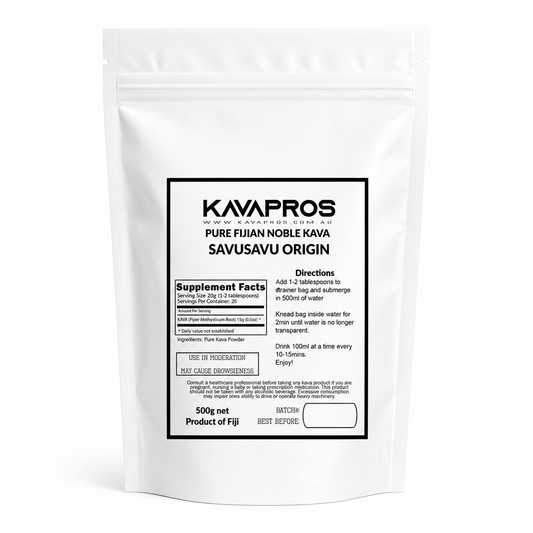
Kava Pros Kava Powder
-
KAVA PROS SAVUSAVU ORIGIN
Regular price From $85.00Regular priceUnit price per$75.00Sale price From $85.00 -
KAVA PROS STARTER PACK
Regular price From $45.00Regular priceUnit price per$0.00Sale price From $45.00