Types of Kava
Types of Kava: Understanding the Different Kava Products Available
Choosing the Right Type of Kava
If you're new to kava, one of the first things you'll notice is that there are several different types available. Terms such as traditional kava, instant kava, micronised kava, noble kava and non-noble kava are commonly used, but many customers are unsure what these terms actually mean.
Understanding the differences between kava types can help you choose a product that matches your preferences, preparation style and experience level.
While all kava originates from the same plant species (Piper methysticum), the way it is grown, processed and prepared can significantly influence the final product.

Noble Kava vs Non-Noble Kava
One of the most important distinctions in the kava industry is the difference between noble and non-noble kava.
What Is Noble Kava?
Noble kava refers to cultivated varieties that have traditionally been consumed throughout the Pacific Islands for generations.
These varieties are typically grown specifically for human consumption and are widely recognised as the preferred choice for traditional kava preparation.
The vast majority of quality kava sold in Australia, Fiji, Vanuatu and other major kava-producing nations is noble kava.
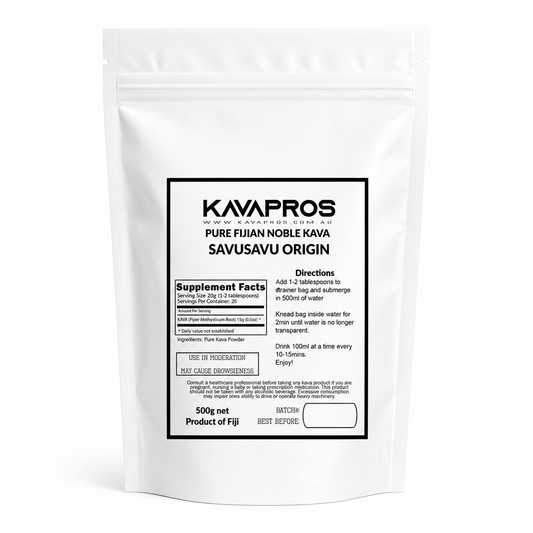
At Kava Pros, we focus on traditional noble kava sourced from Fiji.
What Is Non-Noble Kava?
Non-noble kava refers to varieties that are generally not considered suitable for regular traditional consumption.
In some regions these varieties may be referred to by different names, including "tudei" kava.
Non-noble varieties can differ significantly from noble kava in terms of composition, cultivation history and traditional use.
For this reason, consumers seeking traditional kava are generally advised to choose products made from noble kava varieties.
Why Noble Kava Matters
When purchasing kava, knowing whether a product is made from noble kava is one of the most important quality considerations.
Reputable suppliers are typically transparent about the source and type of kava they sell.
Traditional Kava Powder
Traditional kava powder is the most authentic and widely consumed form of kava throughout the Pacific Islands.
To produce traditional kava powder, mature kava roots are harvested, cleaned, dried and ground into a coarse powder.
The powder is then mixed with water and strained before drinking.
How Traditional Kava Is Prepared
Preparing traditional kava is often much easier than many first-time users expect.
A basic preparation typically involves:
-
Adding kava powder to a strainer bag or shaker bag.
-
Mixing with water.
-
Kneading or shaking for several minutes.
-
Straining and serving.
The entire process usually takes only a few minutes and requires minimal equipment.
Why Many Kava Drinkers Prefer Traditional Powder
Traditional kava powder remains the preferred choice for many experienced kava drinkers because it:
-
Reflects traditional Pacific Island preparation methods
-
Provides the most authentic kava experience
-
Allows flexibility in preparation strength
-
Offers a wide range of cultivars and regional varieties
-
Remains the most widely consumed form of kava in Fiji and other Pacific nations
For many kava enthusiasts, traditional preparation is part of the overall kava experience.
Instant Kava
Instant kava is designed to dissolve directly into water without requiring straining.
Unlike traditional kava powder, instant kava undergoes additional processing such as dehydration to create a finer product that can be mixed and consumed more quickly.
Advantages of Instant Kava
Instant kava is popular because it:
-
Requires no strainer bag
-
Mixes quickly
-
Is convenient for travel
-
Produces minimal preparation mess
Considerations
Because instant kava undergoes additional processing, it is often more expensive than traditional kava powder.
Some consumers also prefer the traditional preparation process and the flexibility offered by traditional grind kava.
Micronised Kava
Micronised kava begins as traditional kava root that has been ground into an extremely fine powder. Unlike traditional kava, micronised products are generally designed to be mixed directly into water without straining.
Advantages of Micronised Kava
Micronised kava offers:
-
Quick preparation
-
No straining required
-
Convenient portability
-
Simple serving preparation
Considerations
Because micronised kava is not typically strained before consumption, very fine root particles remain in the finished drink.
Traditional kava preparation involves mixing kava powder with water and straining out much of the fibrous root material before drinking. Many experienced kava drinkers prefer this traditional approach and believe it provides a cleaner and more authentic kava experience.
Some regular kava consumers also choose traditional strained kava because excessive consumption of fine root material has historically been associated with unwanted effects such as dry skin and a condition commonly referred to in the Pacific Islands as kani kani.
For this reason, many long-term kava drinkers continue to favour traditional kava powder prepared with a strainer bag or shaker bag rather than consuming unstrained root material on a regular basis.
Traditional kava preparation remains the most widely used method throughout Fiji and much of the Pacific Islands today.
Root Types: Waka, Lewena and Whole Root Kava
Another important distinction is the part of the kava plant used during processing.
Waka
Waka refers primarily to the lateral roots of the kava plant. These roots extend outward from the main stump and are traditionally considered one of the most sought-after parts of the plant.
Waka is often valued because it contains a different balance of naturally occurring compounds compared with the stump portion of the plant. Many experienced kava drinkers describe waka as having a stronger flavour profile and a more pronounced traditional kava character.
Because of its popularity, waka is frequently used in premium kava products throughout Fiji and the Pacific Islands.
Lewena
Lewena refers to the stump or basal root section of the kava plant. This portion sits between the stem and the lateral root system.
Many kava drinkers appreciate lewena for its smoother flavour profile and milder taste compared with waka. It is commonly used either on its own or blended with waka to create a more balanced drinking experience.
In Fiji, both waka and lewena have long histories of traditional use, and individual preferences often come down to flavour and preparation style.
Whole Root Kava
Whole root kava combines multiple parts of the kava plant, including both waka and lewena.
Rather than emphasising one particular root component, whole root products aim to provide a balanced representation of the entire root system.
Many traditional kava powders use a blend of root components because this approach helps create consistency from batch to batch while retaining the characteristics associated with the full kava plant.
Single Cultivar vs Blended Kava
Some kava products are made from a single cultivar, while others combine multiple cultivars.
Single Cultivar Kava
Single cultivar products are produced using one specific kava variety.
These products allow customers to experience the unique characteristics associated with a particular cultivar.
Blended Kava
Blended kava combines multiple cultivars.
Blends are often created to achieve consistency, balance and a particular flavour profile.
Both approaches are widely used throughout the kava industry.
Which Type of Kava Is Best?
There is no single "best" type of kava.
The right choice depends on personal preference and how you intend to prepare and enjoy your kava.
Traditional kava powder remains the most authentic and widely consumed form of kava throughout the Pacific Islands.
Instant and micronised kava offer convenience and simplified preparation.
Noble kava remains the preferred choice for traditional consumption, while understanding the difference between noble and non-noble varieties can help consumers make more informed purchasing decisions.
For customers seeking an authentic introduction to kava, traditional noble kava powder remains the benchmark against which all other kava products are compared.
Frequently Asked Questions
What is the difference between noble and non-noble kava?
Noble kava refers to varieties traditionally cultivated for consumption throughout the Pacific Islands. Non-noble varieties are generally not considered the preferred choice for traditional use.
What is traditional kava powder?
Traditional kava powder is dried and ground kava root that is mixed with water and strained before drinking.
Is traditional kava difficult to prepare?
No. Traditional kava can usually be prepared in just a few minutes using a strainer bag or shaker bag and water.
What is instant kava?
Instant kava is processed to dissolve directly into water without straining.
What is micronised kava?
Micronised kava is ground into a very fine powder and is generally prepared without straining.
Which type of kava do most Pacific Islanders use?
Traditional kava powder remains the most widely used and culturally significant form of kava throughout the Pacific Islands.
What type of kava does Kava Pros specialise in?
Kava Pros specialises in traditional noble Fijian kava powder sourced from respected growing regions in Fiji.
Kava Pros Kava Powder
-
KAVA PROS SAVUSAVU ORIGIN
Regular price From $85.00Regular priceUnit price per$75.00Sale price From $85.00 -
KAVA PROS STARTER PACK
Regular price From $45.00Regular priceUnit price per$0.00Sale price From $45.00